Asian Carp and our Great Lakes
Asian Carp and our Great Lakes
The newest threat to the Great Lakes ecosystem is a potential invasion of Asian carp. Silver and Bighead carp are voracious eaters, capable of displacing native fish and wreaking havoc on Lake Erie's $1 billion fishing industry. Both species have caused serious damage to ecosystems in other American waterways, and both are making their way up the Mississippi toward the access points on or near the Great Lakes. Of special concern is the most viable pathway, the man-made Chicago Sanitary and Ship Canal.
Representative Kaptur has joined other Great Lakes leaders in calling for the restoration of the natural divide between the Chicago waterway system and Lake Michigan. She co-sponsored the Stop Invasive Species Act in 2012, which requires the Army Corps of Engineers to submit to Congress an expedited action plan for addressing invasive species threatening the Great Lakes. She also cosponsored the Stop Asian Carp Now Act, which pushed the Army Corps of Engineers to release the Brandon Road Study which lays out a plan to keep Asian Carp from entering our Great Lakes.
More on Asian Carp and our Great Lakes
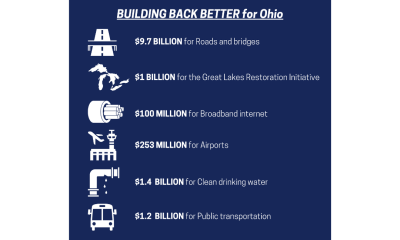
Washington, D.C. – Today, Congresswoman Marcy Kaptur (OH-09) released the following statement after joining Congressional colleagues and Ohio leaders at the White House for President Joe Biden's signing of the Bipartisan Infrastructure Investment and Jobs Act. President Biden's signing of the bill comes after more than 97 percent of House Democrats voted for the bill, while 94 percent of House Republicans opposed – including all but one Ohio Republican, Congressman Anthony Gonzalez (OH-16).
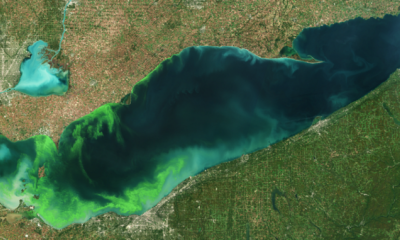
Washington, D.C. – Today, Congresswoman Marcy Kaptur (OH-09), Co-Chair of the House Great Lakes Task Force, announced $1,777,440 in federal funding from the National Oceanic and Atmospheric Administration (NOAA) to support five Great Lakes harmful algal bloom (HAB) research projects.
Washington, D.C. – Today, Congresswoman Marcy Kaptur (OH-09) released the following statement after the House of Representatives passed a package of seven fiscal year 2022 appropriations bills, including Labor, Health and Human Services, and Education ($254 billion), Agriculture ($197 billion), Energy and Water ($53 billion), Financial Services ($29 billion), Interior ($43 billion), Military Construction and Veterans Affairs ($280 billion), and Transportation and Housing and Urban Development ($163 billion).
Washington, D.C. — Today, the bipartisan House Great Lakes Task Force Co-Chairs Representatives Marcy Kaptur (D-OH), Debbie Dingell (D-MI), David Joyce (R-OH), and Bill Huizenga (R-MI), along with Bill Foster (D-IL) and Jack Bergman (R-MI), led a group of 32 Members of Congress in sending a bipartisan letter to Office of Budget and Management (OMB) Acting Director Shalanda Young and Acting Assistant Secretary of the Army for Civil Works Jaime A. Pinkham outlining the Task Force's budget priorities for the Great Lakes region in FY2022.
Washington, D.C. — Today, the bipartisan House Great Lakes Task Force Co-Chairs Representatives Marcy Kaptur (D-OH), Debbie Dingell (D-MI), David Joyce (R-OH), and Bill Huizenga (R-MI), alongside Reps. Bill Foster (D-IL) and Jack Bergman (R-MI), led 21 Members of Congress in sending a bipartisan letter to Assistant Secretary of the Army for Civil Works Rickey "R.D." James regarding the Task Force's priorities for the Great Lakes region as the Army Corps of Engineers (Corps) develops its fiscal year (FY) 2021 work plan.
Washington, D.C. — Today, Congresswoman Marcy Kaptur (D-OH), Chairwoman of the House Appropriations Subcommittee on Energy and Water Development and Related Agencies, released the following statement highlighting the Northern Ohio priorities included in the House-passed 2021 Energy and Water Development Appropriations bill, legislation she introduced and shepherded through Congress. The legislation funds the Department of Energy, U.S. Army Corps of Engineers, Department of the Interior programs, and other related agencies. The bill was passed as a part of a bipartisan omnibus package that funds the federal government through September 2021.
Washington, D.C. — Today, Congresswoman Marcy Kaptur (D-OH), Chairwoman of the House Appropriations Subcommittee on Energy and Water Development and Related Agencies, released the following statement after the House passed her 2021 Energy and Water Development Appropriations bill. The legislation funds the Department of Energy, U.S. Army Corps of Engineers, Department of the Interior programs, and other related agencies. The bill was passed as a part of a bipartisan omnibus package that funds the federal government through September 2021.
Washington, D.C. – Today, Co-Chairs of the House Great Lakes Task Force Representatives Marcy Kaptur (D-OH), David Joyce (R-OH), Debbie Dingell (D-MI), and Bill Huizenga (R-MI) led a bipartisan letter to the House Transportation and Infrastructure Committee urging the Committee to include support for the Great Lakes in this year's Water Resources Development Act (WRDA) as it moves to conference the legislation with the Senate.
Washington, D.C. – Today, Co-Chairs of the House Great Lakes Task Force Representatives Marcy Kaptur (D-OH), David Joyce (R-OH), Debbie Dingell (D-MI), and Bill Huizenga (R-MI) released the following statement after the House Transportation and Infrastructure Committee passed legislation authorizing the construction of a multilayered system to prevent the spread of invasive species at the Brandon Road Lock and Dam. The project, which will be carried out by the Army Corps of Engineers, is intended to prevent invasive Asian Carp from entering the Great Lakes.
Washington, D.C. — Today, Congresswoman Marcy Kaptur (OH-09), released the following statement after the House Committee on Transportation and Infrastructure voted to pass out of committee her legislation to rename the Saint Lawrence Seaway Development Corporation as the Great Lakes St. Lawrence Seaway Development Corporation. The purpose of the legislation is to celebrate the Seaway's central role in promoting commerce, economic development, and national security not only in the Great Lakes region but across the entire United States.